
Your search results
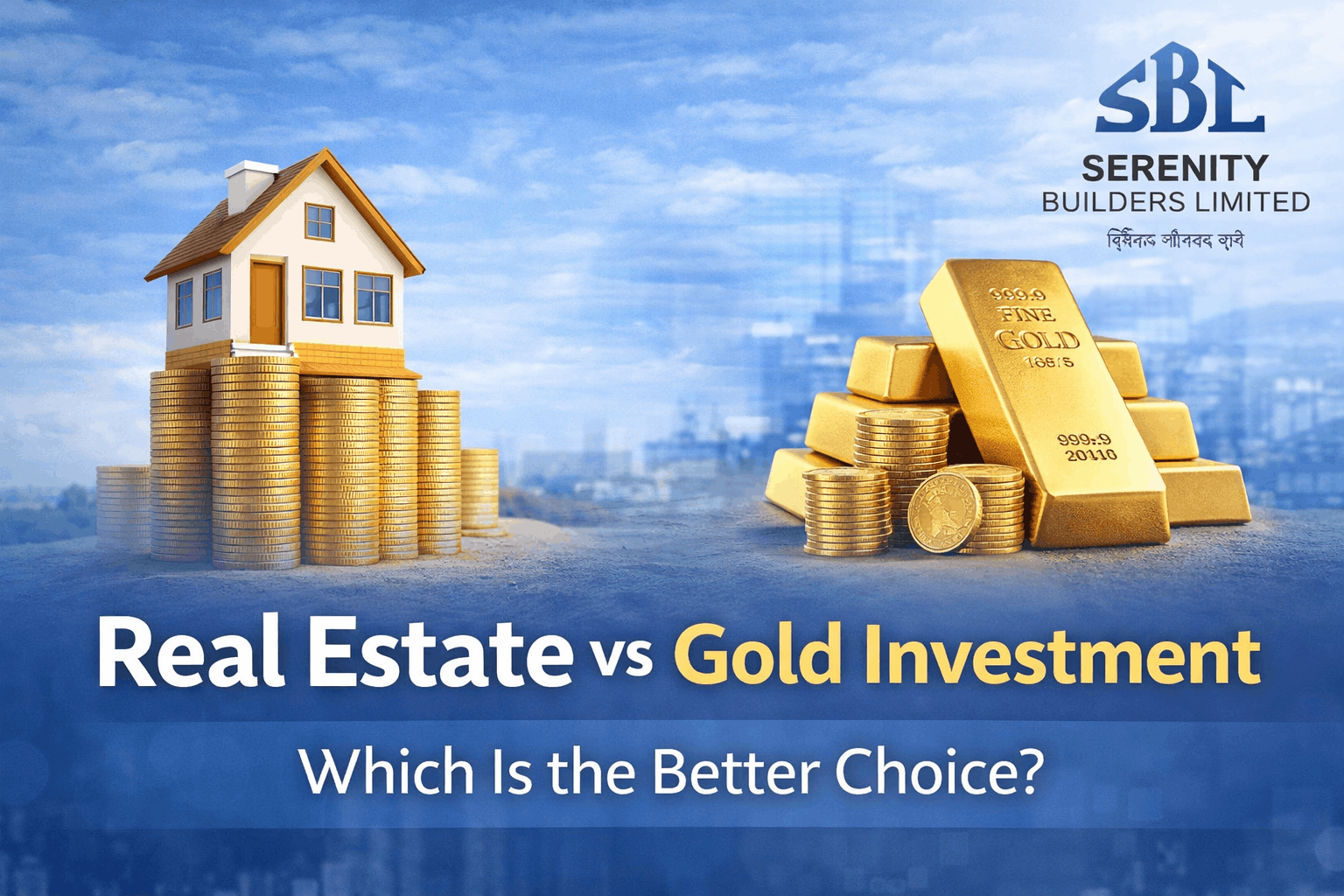
Real Estate vs Gold Investment: Which Is the Better Choice?
When it comes to long-term investment in Bangladesh, two of the most popular options are real estate and gold. Both have been trusted for generations as safe investment choices. However, modern investors are increasingly asking: Which one offers better returns, stability, and long-term value?
While gold is known for its liquidity and cultural value, real estate stands out as a more powerful and sustainable wealth-building asset. In this article, we compare real estate vs gold investment to help you make a smarter financial decision.
1. Long-Term Value Growth
Gold prices do fluctuate over time, but their growth is often slow and dependent on global market conditions. While gold may protect wealth, it does not always significantly multiply it.
Real estate, on the other hand, has historically shown strong long-term appreciation—especially in developing and planned areas. As cities expand and infrastructure improves, property values tend to rise steadily.
Investing in real estate allows your asset to grow alongside urban development, making it a more reliable option for long-term wealth creation.
2. Income Generation Potential
One of the biggest differences between gold and real estate is income generation.
Gold is a passive asset. It sits idle and does not produce any regular income unless sold at a higher price.
Real estate, however, can generate consistent rental income. Whether it’s an apartment, commercial space, or land lease, property can provide monthly cash flow while still appreciating in value.
This dual benefit—income + appreciation—makes real estate a far more dynamic investment.
3. Stability and Market Behavior
Gold prices are heavily influenced by global economic conditions, currency fluctuations, and geopolitical factors. This can lead to unpredictable price movements.
Real estate is generally more stable. While there may be short-term fluctuations, property values tend to grow steadily over time due to consistent demand for housing and land.
People will always need homes. This fundamental demand makes real estate a more stable and secure investment option compared to gold.
4. Tangible Asset with Practical Use
Both gold and real estate are tangible assets, but their usability differs significantly.
Gold is mainly stored for value and has limited practical use beyond jewelry or resale.
Real estate, however, offers real-life utility. It can be used for:
- Living with your family
- Generating rental income
- Running a business
- Long-term investment
This functional value adds an extra layer of benefit that gold simply cannot provide.
5. Protection Against Inflation
Gold is often considered a hedge against inflation, but its performance can vary depending on global demand and currency trends.
Real estate also acts as a strong inflation hedge. As inflation rises, property prices and rental income typically increase as well. This ensures that your investment not only retains value but continues to grow.
In many cases, real estate outperforms gold in maintaining and increasing purchasing power over time.
6. Liquidity vs Value Growth
Gold has high liquidity—you can sell it quickly when needed. This is one of its main advantages.
Real estate, however, is less liquid. Selling property takes time, but this also encourages long-term investment discipline. Instead of quick selling, investors tend to hold properties longer, allowing value to grow significantly.
In the long run, this lower liquidity often results in better wealth accumulation.
7. Emotional and Lifestyle Value
Gold holds emotional and cultural value, especially in South Asian societies. However, it does not contribute to daily living or lifestyle improvement.
Real estate provides both emotional and practical value. Owning a home offers security, comfort, and a sense of achievement. It improves quality of life while also acting as a financial asset.
This combination of emotional satisfaction and financial return makes real estate a more complete investment.
8. Investment Size and Growth Potential
Gold investments are usually limited by the amount you can purchase at a time.
Real estate allows for larger investment opportunities. With proper planning or financing, investors can acquire high-value assets that grow significantly over time.
This scalability makes real estate more suitable for serious wealth building.
Conclusion: A Smarter Investment for the Future
Both gold and real estate have their advantages, but when it comes to long-term growth, income generation, and overall value, real estate clearly stands out.
Gold may help preserve wealth, but real estate helps grow it.
For investors looking to secure their future, generate passive income, and benefit from long-term appreciation, real estate is not just an alternative—it is a strategic choice.